Available 24/7
Currency

In our store, you can easily return most new and unopened products within 30 days after delivery for a full refund.
If the error is on our part (incorrect or damaged product), we also cover the return shipping costs. 🚚✅
The refund will be issued within 14 days after we receive your package.
In most cases, this process is even faster!
Nothing simpler:
Yogurt is a popular product with a delicious taste of freshly soured milk. It is the most popular product for everyday consumption.
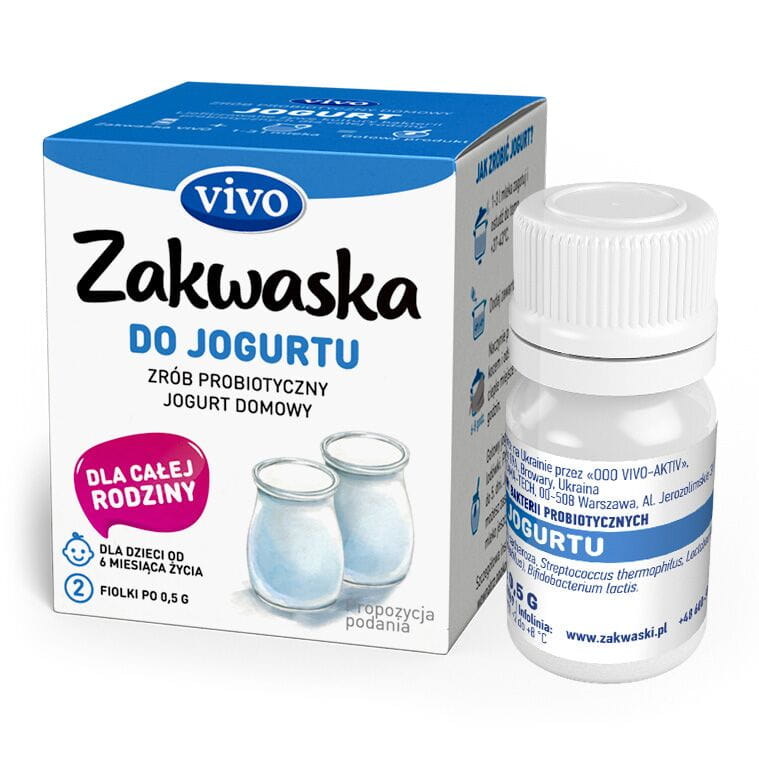
VIVO yogurt is a starter for homemade sour yogurt.
Vivo yogurt contains milk acidifying streptococci, kw bacteria. Three types of milk sticks, Bulgarian stick.
Benefits of Eating Yogurt
Yogurt quenches thirst and hunger, restoring strength and energy. It is recommended for people of all ages, but is especially valuable for the elderly. Daily yogurt consumption meets the body's needs for amino acids, calcium salts, vitamins, and other nutrients—important for all of us. It is also particularly beneficial for athletes and people who undergo increased physical or mental exertion.
Yogurt normalizes digestion and promotes the elimination of harmful substances from the body. Yogurt bacteria produce significant amounts of lactic acid, which inhibits the growth of bacteria that cause various problems. Eating yogurt every day strengthens the immune system.
Regular consumption of live yogurt increases metabolic rate. This helps normalize body weight and body fat content.
How to make homemade Vivo yogurt?
A bottle containing sourdough powder should be half-filled with room-temperature milk, the cap tightly closed, and the bottle shaken until the powder is completely dissolved in the bottle. If some of the powder sticks to the bottom, for example, use the reverse of a teaspoon to rub it vigorously to dissolve it in the milk and achieve the thinnest possible consistency.
After preparing the starters, prepare 1 or 2 liters of pasteurized milk.
In the case of milk "straight from the cow", they must be boiled and cooled to 37-40 degrees C.
Pasteurized milk does not require cooking. To achieve the correct temperature, boil 1 liter of milk and chill the other liter in the refrigerator. Then mix the warm and cold milk together; the temperature will then be approximately 37-40°C, ideal for the multiplication of bacterial cultures. Milk can also be heated to a temperature of 37-40°C by checking the temperature with a kitchen thermometer.
Then pour the contents of the bottle into the previously prepared milk and mix well.
The whole thing can be left in the pot in which the milk was previously heated (the pot will release the heat necessary for the bacteria to multiply). The pot should be carefully covered and insulated (for example, with a towel or blanket), and then set aside in a warm place. Milk containing bacteria can also be poured into a thermos, a jar with a lid, or a bowl with a lid. To prevent heat loss, this dish should be wrapped with a large towel or blanket.
The dish should be left for 8-10 hours in a warm, draft-free place and still (do not stir). The curdled milk has a thick consistency. If a thermos was used, after acidification, pour its contents into a storage container, for example, a jar, bowl, etc.
Store the finished product in the refrigerator for up to 7 days.
All flavorings, fruits, etc. should be added to the yogurt just before consumption.
You can also prepare yogurt in a yogurt maker or Thermomix - following the instructions for these devices.
Attention !
All dishes that will come into contact with milk must be clean. It is recommended to scald them first with boiling water.
Get the latest updates on new products and upcoming sales.
Thanks for subscribing!
This email has been registered!